
Breast Cancer Awareness Myths and Facts: What Everyone Should Know
Did you know that 1 in 8 women will be diagnosed with breast cancer during their lifetime? This makes breast cancer the most common cancer among women around the world. According to a 2026 study from the American Cancer Society, roughly 321,910 women in the United States will be diagnosed with invasive breast cancer, and an estimated 42,140 women will die from the disease. These numbers are not statistics; they represent real people. They are our colleagues, our friends, our mothers, sisters, and daughters. Each of them lives through the challenges of this illness every day.
Every October, Breast Cancer Awareness Month gives organizations a chance to do something. It’s a time to share information, encourage early screenings, and stand by those who are facing breast cancer fear. This year’s theme from the World Health Organization, “Every story is unique, every journey matters,” further emphasizes the importance of acknowledging and respecting each individual’s experience with breast cancer.
Getting reliable information is a key part of that support. Knowing the facts helps reduce worry and supports better decisions. This guide covers the myths & facts, including family history, age, and breast cancer in men.
Please remember: This blog is for general educational purposes only and is not medical advice. Consult a healthcare provider about any health concerns or changes.
Breast Cancer Facts Everyone Should Know
Myths about breast cancer can create confusion and may discourage people from seeking timely medical care. Here, we break down common myths and evidence-based facts on lumps, family history, age, and mammograms. Understanding the facts can help readers make informed decisions and seek prompt medical guidance when needed.
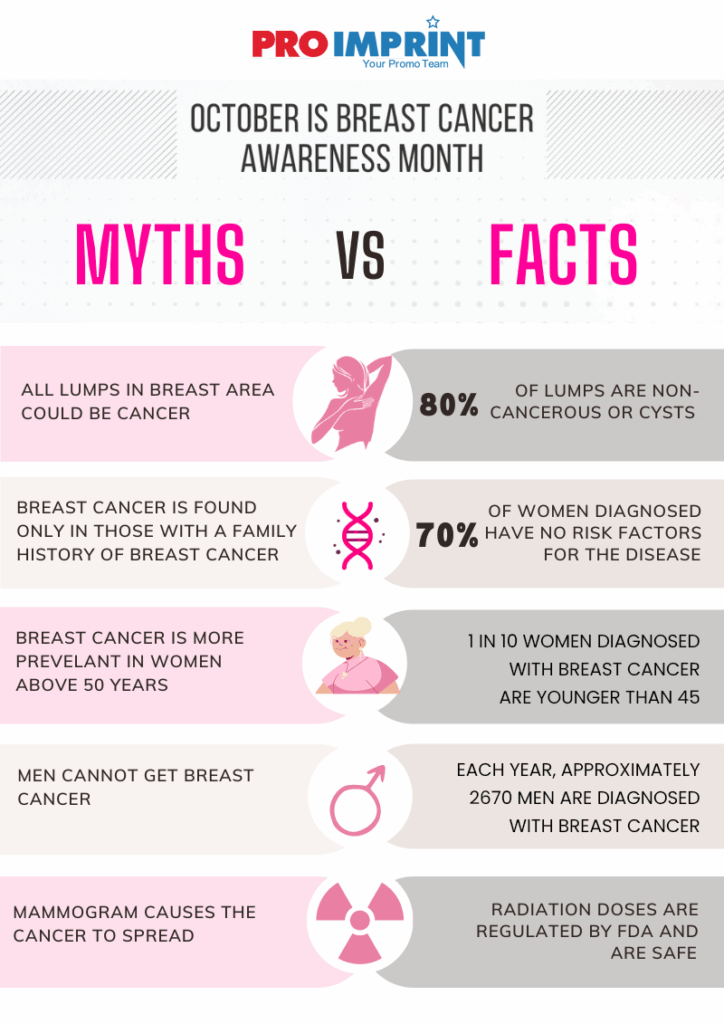
Myth 1: A breast lump indicates you have breast cancer.
Fact: A breast lump does not necessarily mean cancer. The American Cancer Society states that most breast lumps are benign, or noncancerous. However, a healthcare professional should evaluate any new lump or unusual breast change rather than self-diagnosing.
Lumps can have several possible causes, including benign breast conditions. The important step is to have an unusual change properly evaluated.
Myth 2: You cannot develop breast cancer if you have no family history.
Fact: Most people diagnosed with breast cancer do not have a known family history of the disease. While inherited genetic factors and family history can increase risk, age and other factors also play a role (NBCF). Knowing your personal risk factors and following recommended screening guidance can help support early detection.
Myth 3: Breast cancer only affects older women.
Fact: Of course, breast cancer does become more common as women get older, but younger women can also develop the disease. The ACS reports that about 1 in 10 women diagnosed with breast cancer are younger than 45.
Age matters, but it should never be a reason to overlook a new or unusual breast change. Encourage quick attention to any concerns, regardless of age.
Myth 4: Men cannot get breast cancer.
Fact: Men can develop breast cancer, although it is rare. The ACS estimates that 2,670 men in the U.S. will be diagnosed with invasive breast cancer in 2026, and approximately 530 men will die from it. Fewer than 1% of breast cancers in the U.S. occur in men.
Signs in men can include a breast lump, nipple changes, discharge, skin changes, or swelling. Discuss any unusual changes with a medical expert. (NCI)
Myth 5: A mammogram causes breast cancer or spreads it.
Fact: Mammograms use low-dose X-rays to create images of the breast and are an important screening tool for detecting breast cancer. They do not cause breast cancer to spread. The American Cancer Society provides age-based mammography guidance for women at average risk.
| Age Range | Recommended Screening Frequency |
| 40-44 | Option to start annual mammograms |
| 45-54 | Annual mammograms |
| 55 and older | Every 2 years or continue annually, based on preference |
| All ages | Continue while in good health with ≥10 years life expectancy |
Source: American Cancer Society (ACS) – Breast Cancer Screening Guidelines
Why Breast Cancer Awareness Month Matters
Awareness campaigns are more than a yearly tradition; they are a strategic way to share trusted information, promote conversations, and show real support for those impacted by breast cancer, helping organizations, teams, and communities create a meaningful difference.
Every October, Breast Cancer Awareness Month gives organizations, teams, and communities a platform to turn awareness into meaningful action that supports those impacted by breast cancer.
For 2026, WHO’s theme, “Every story is unique, every journey matters,” brings attention to the personal nature of breast cancer and the importance of dignity, support, and access to quality care.
WHO similarly emphasizes that breast cancer outcomes can vary greatly between countries because access to early diagnosis and quality treatment is not equal everywhere. This Global Breast Cancer Initiative works to improve early diagnosis, timely treatment, and survival worldwide.
Turning Awareness Into Action
Accurate breast cancer facts help your organization challenge misinformation, drive compassionate conversations, and equip people with trustworthy information for early action without creating unnecessary concern.
Organizations, workplaces, and communities can use awareness events, walks, fundraisers, and support campaigns to strengthen the message. Branded breast cancer awareness products like pink ribbon items, mini buddy buckets, breast cancer-themed drinkware, and awareness ribbon-shaped magnets give teams a practical way to share the message and boost fundraising. Choose from our collection of promotional breast cancer awareness products to make a greater impact with your next awareness campaign.
Every fact you share, every conversation you start, and every community effort brings breast health information to more people. Which breast cancer myth will your organization help debunk this year?
Suggested Products






 Talk To a REAL Human...
Have a budget and no clue what to do?
Or you want some high end swag you don’t see on our site?
Talk to a specialist and let us help you look like a hero!